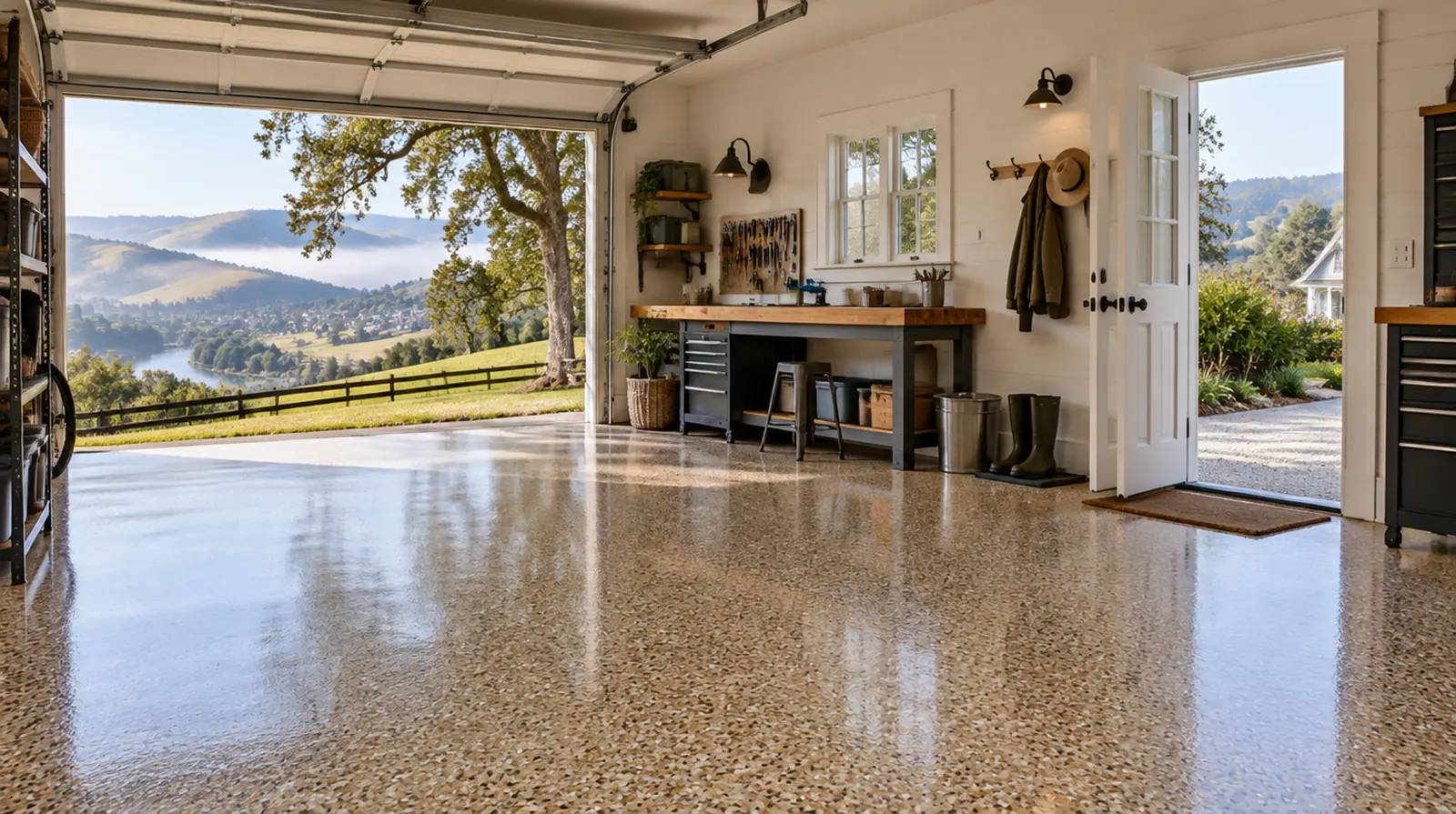
Why flake floors work so well here
A flake floor is made of colored vinyl chips broadcast into a wet epoxy base until the surface is fully covered. Once it cures, we scrape off the loose chips and seal everything under a clear topcoat. The result is a floor with a speckled, stone-like look and a slightly textured feel underfoot. That texture matters in a town where wet boots and damp tires are part of daily life for half the year.
The pattern is the other big reason people choose flake. Mud, dust, dog hair and sawdust blend into the color mix, so the floor looks clean between sweepings. A solid gray floor shows every footprint. A flake floor hides most of them, which is why it is the most popular garage system we install in town.
How we build a flake floor
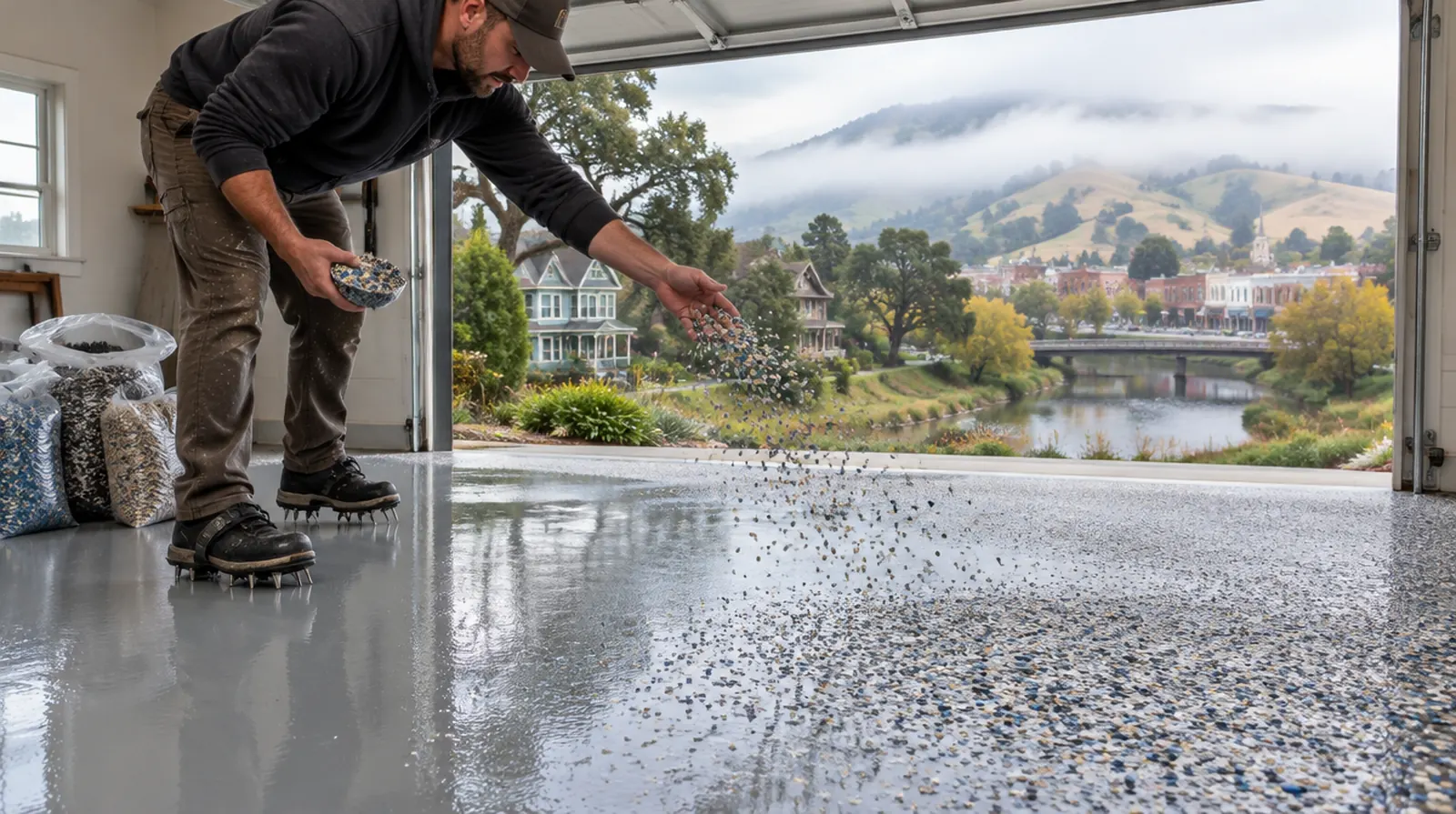
Preparation is the same as any coating we do. We diamond grind the slab with vacuum-attached machines, take moisture readings and repair cracks and chips. Because of the clay soil and wet winters, damp slabs are common here, and we use a moisture-mitigating primer when the readings call for it. Then we roll on a pigmented epoxy base coat and broadcast flake by hand until no base color shows through. After it cures, we scrape and vacuum the excess, then apply one or two clear topcoats. The topcoat is what gives the floor its sheen and protects the flakes from wear and sunlight.
Full broadcast is what we recommend for most garages. It gives the thickest, toughest build and the best hide. Partial broadcast, with flakes scattered over a solid base, is possible too, but it shows more dirt and is a little less durable.
Picking a blend
Flake blends come in dozens of color mixes and several chip sizes. Grays, whites and blacks are the most common in modern garages. Tans, browns and creams look natural in farmhouse and ranch homes and hide dried mud especially well. Larger chips show a bolder pattern, and smaller chips look more like granite. We bring real samples to the estimate, and we suggest looking at them on the floor in your own garage light, because a blend that looks light in a showroom can look darker on a big slab.
Mudrooms, barns and workshops
Flake floors are not only for parking cars. We install them in mudrooms and laundry rooms where people come straight in from the yard. We coat converted barns and outbuildings used as workshops, potting rooms and storage for feed and tools. We also do kennels and grooming rooms, where a seamless, sealed floor is much easier to clean and disinfect than bare concrete. For floors that get hosed down often, we add extra grit to the topcoat and check the slope so water runs out instead of pooling.
Durability and topcoat options
The flake layer is protected by the clear topcoat, so the topcoat choice matters. We usually use a polyaspartic or UV-stable urethane topcoat over the epoxy base. These hold their color near an open door and stand up to hot tires, road salt from mountain trips and chemicals like brake fluid. On floors that need to be back in use fast, we can build the whole system with polyaspartic, which you can read about on our polyaspartic floor coating page.
Old floors and failed coatings
Many garages we see already have a coating on them, often a paint or kit product that has started to peel. Flake can hide a lot, but it cannot fix a bad bond. We grind off the old coating so the new floor bonds to clean concrete. If the old floor is a sound commercial-grade coating, we sometimes grind and recoat over it instead, which can save time. We will explain the option that fits your floor and why.
Living with a flake floor
Day-to-day care is simple. Sweep or use a dust mop to remove grit, and mop with warm water and a mild, pH-neutral cleaner. A soft deck brush helps lift dirt out of the texture. Wipe up oil and chemicals before they sit for days. Put mats under cars that drip and pads under kickstands. A flake floor that is cared for this way can look good for many years.
You can usually walk on it the next day. With an epoxy base, plan on two to three days before parking. With a polyaspartic system, it is often the next day.
Questions
Is flake slippery?
The flakes add texture, and we can add grit to the topcoat for extra grip on wet floors.
Does it hide cracks?
It helps visually, but we still repair every crack first so it does not come through later.
Can I pick a custom blend?
Yes. Ask us at the estimate and we will show what is possible.
Ready to see colors on your own floor? Book a free estimate. For a solid color look, see garage floor epoxy.
Get your flake floor estimate
Call (707) 940-7151 for a free estimate.