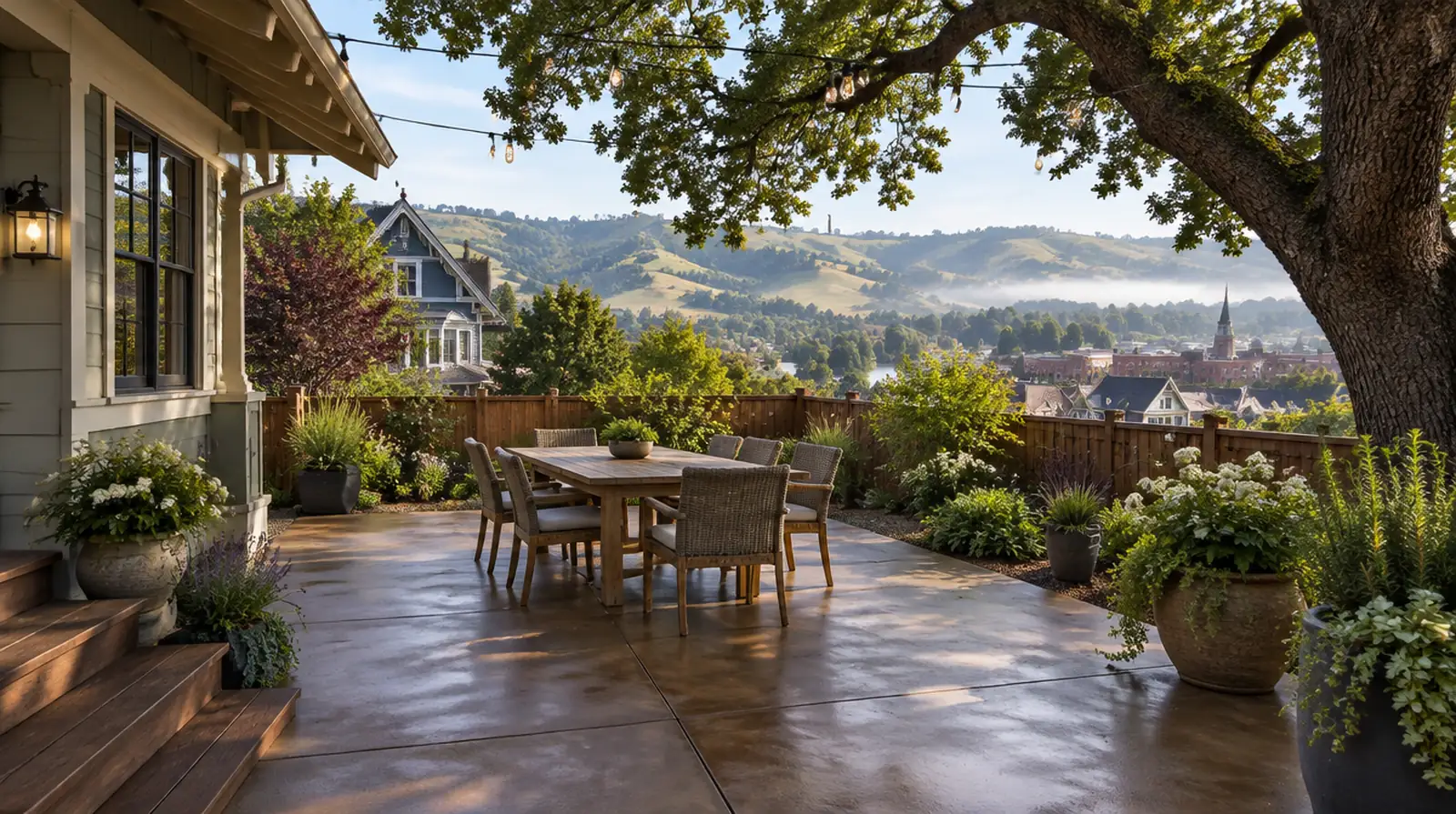
Why outdoor concrete needs protection
Concrete looks solid, but it is full of tiny pores. Rain, irrigation water, fallen leaves, oil and food spills soak into those pores. In Petaluma, the long wet season keeps outdoor slabs damp for months. Moss and algae grow on shaded walks and patios, especially under oaks and along the north side of homes. Leaves and acorns leave tannin stains. Mineral crust forms where water evaporates. Over years, the surface weakens and the concrete starts to look old, dirty and rough.
A good sealer slows all of that down. It closes the pores so water beads up and runs off, stains have less chance to soak in, and moss and algae have a harder time taking hold. The concrete stays stronger and much easier to clean.
Types of sealers
There are two main kinds. Penetrating sealers, such as silane and siloxane blends, soak into the concrete and repel water from within. They do not change the look much, leave no film and do not get slippery. They are a great choice for walks, steps, driveways and pool decks. Film-forming sealers, such as acrylics, sit on top and can add a wet look or a richer color. They make stamped and colored concrete pop but need resealing more often and can be slick when wet unless we add grit. We will recommend the right type for each surface.
How we seal
Sealer only works on clean concrete. We start by cleaning the surface, usually with a surface cleaner and hot water, and treating moss, algae and stains as needed. We let the slab dry, check that it is ready and repair cracks or chips where needed. Then we apply the sealer with sprayers and rollers in even coats, paying attention to edges and joints. We keep it off plants, siding and doors. Most sealed areas can take foot traffic within a few hours and vehicles within a day or two.
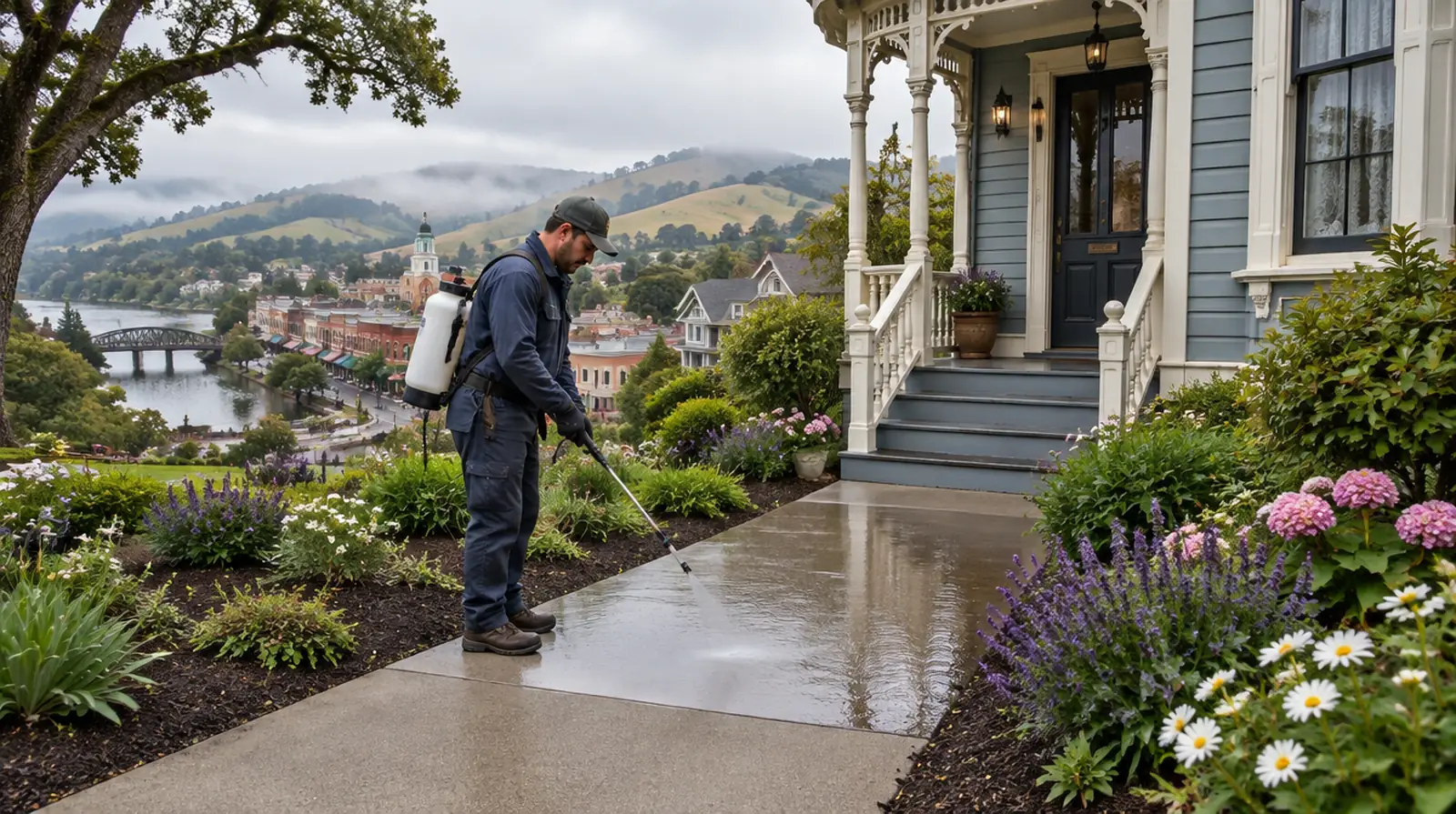
Patios and backyard spaces
Many homes in town have large backyard patios used for dining, gardening and gatherings. Those slabs get food, wine, grease from grills and leaf stains. Sealing makes cleanup much easier and helps colored or stamped concrete keep its look. If you have a covered patio, we may recommend a film-forming sealer for a richer tone. For open patios that get wet in winter, a penetrating sealer is usually safer underfoot.
Walks, steps and porches
Front walks and steps on older homes often see moss, cracking and worn edges. Sealing helps keep moss down and slows the damage from water. If the steps are shaded and slick in winter, we can add a fine grit to make them safer. We also seal porches on Victorians and Craftsman homes where painted wood meets concrete, taking care to keep sealer off the trim.
Garages and interior slabs
Not every garage needs a full coating. If you mostly want to stop dust and make cleanup easier, a penetrating sealer or densifier can be a budget-friendly option. It will not resist hot tires or chemicals like a coating does, but it is a big step up from bare concrete. If you want a durable, finished floor, see our garage floor epoxy page.
When to reseal
Penetrating sealers usually last several years before they need another coat. Film-forming sealers often need a fresh coat every two to three years, depending on sun and traffic. A simple test is to splash water on the surface. If it beads, the sealer is still working. If it soaks in and darkens the concrete, it is time to reseal. We can set up a reminder so you do not have to keep track.
New concrete
Sealing is also smart after new concrete is poured, such as a patio extension or a new walkway. Fresh concrete is at its most porous, and sealing it once it has cured keeps the first stains from setting in. We can coordinate timing with your concrete contractor so the slab is ready when we arrive.
Questions
Will sealer make my patio slippery?
Penetrating sealers do not. Film-forming sealers can, so we add grit where needed.
Can you remove existing stains?
We clean and treat stains before sealing. Some deep stains fade but do not disappear completely.
How long before I can use the patio?
Usually a few hours for foot traffic and a day for furniture.
Ready to protect your outdoor concrete? Book a free estimate. For driveways, see driveway coating.
Get your sealing estimate
Call (707) 940-7151 for a free estimate.